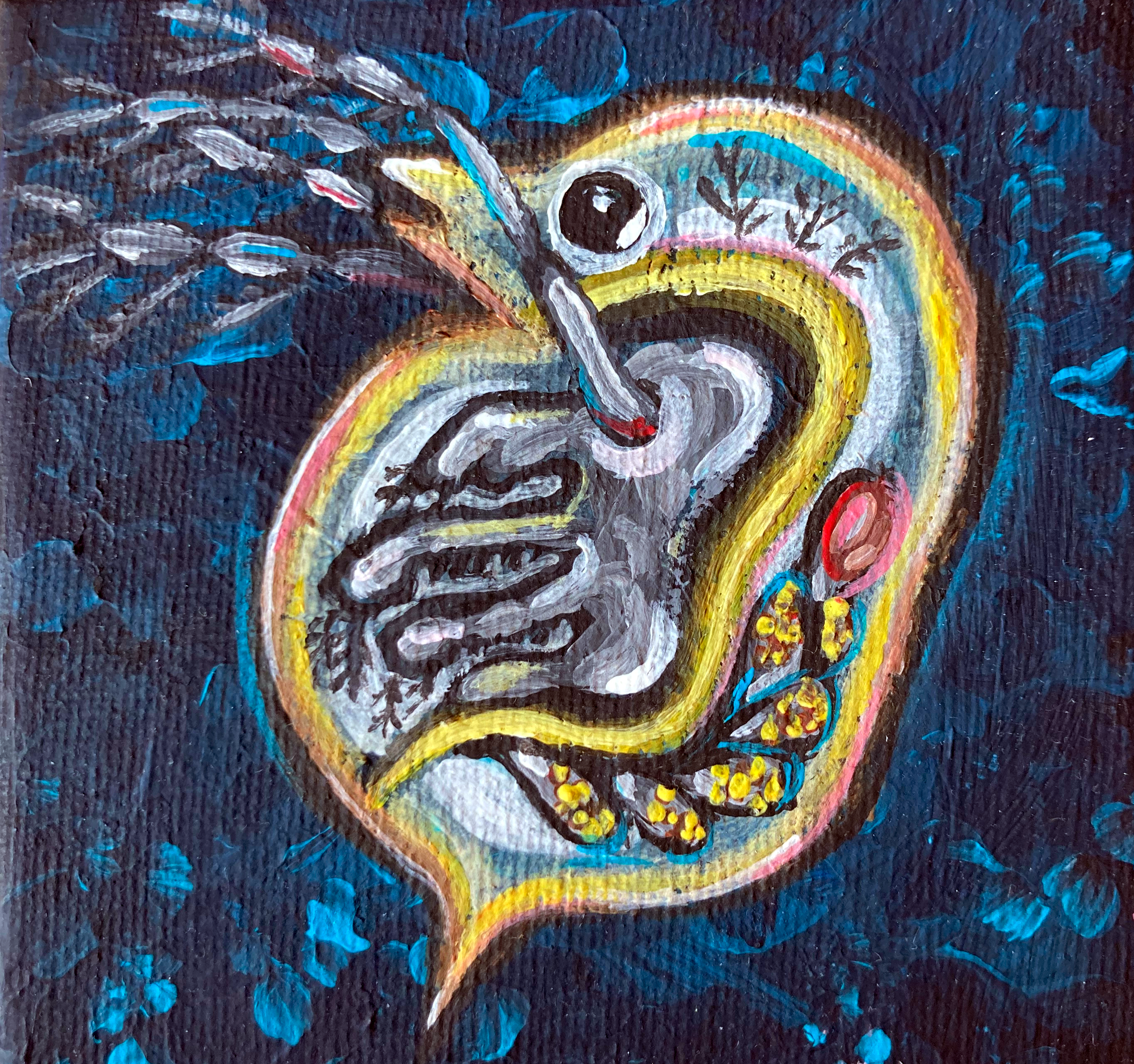
Host outnumbered: microbiomes and a fungal parasite interact to shape host genotype-dependent survival
🔥 New preprint by Amruta
This study uses cutting-edge microbiome transplant experiments, revealing that microbiome composition impacts the outcome of host-parasite interactions through mediating host survival.
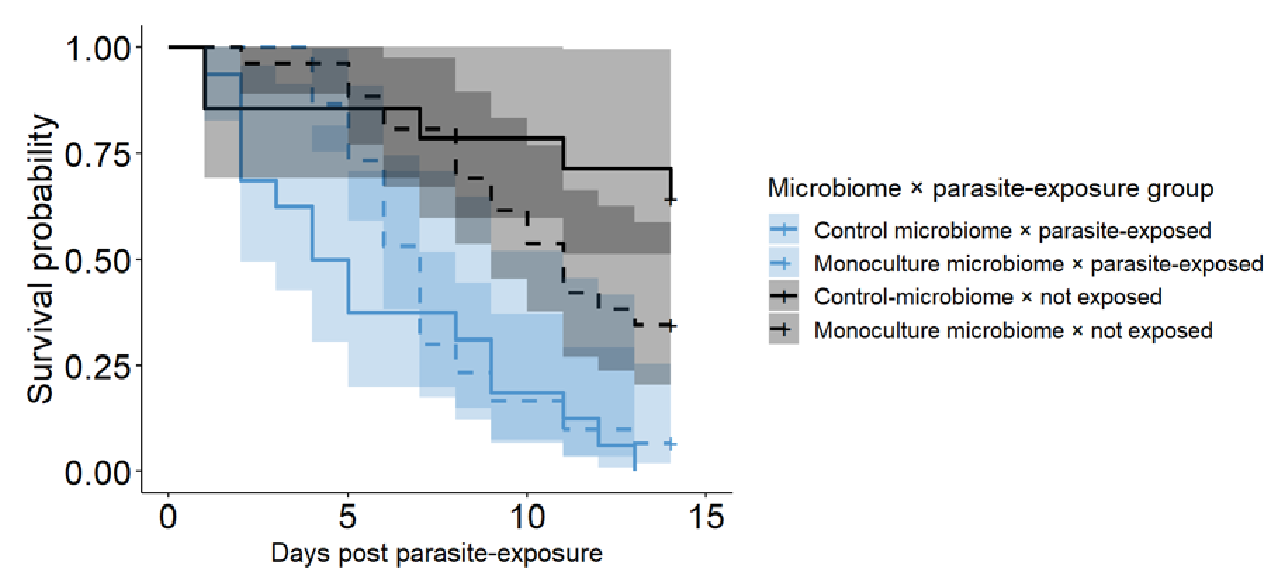
Rajarajan, A, Coone M, Wolinska J, Spaak P, Decaestecker E.
Published: January 2026, BioRxiv
🔗 Read the full paper
Host outnumbered: microbiomes and a fungal parasite interact to shape host genotype-dependent survival
🔥 New preprint by Amruta
This study uses cutting-edge microbiome transplant experiments, revealing that microbiome composition impacts the outcome of host-parasite interactions through mediating host survival.
Rajarajan, A, Coone M, Wolinska J, Spaak P, Decaestecker E.
Published: January 2026, BioRxiv
🔗 Read the full paper
Linking Individual Performance to Density‐Dependent Population Dynamics to Understand Temperature‐Mediated Genotype Coexistence
New paper by Marjolein
Integrating Modern Coexistence Theory with stage-structured population modelling reveals the demographic mechanisms that underly rapid evolutionary responses in Daphnia.
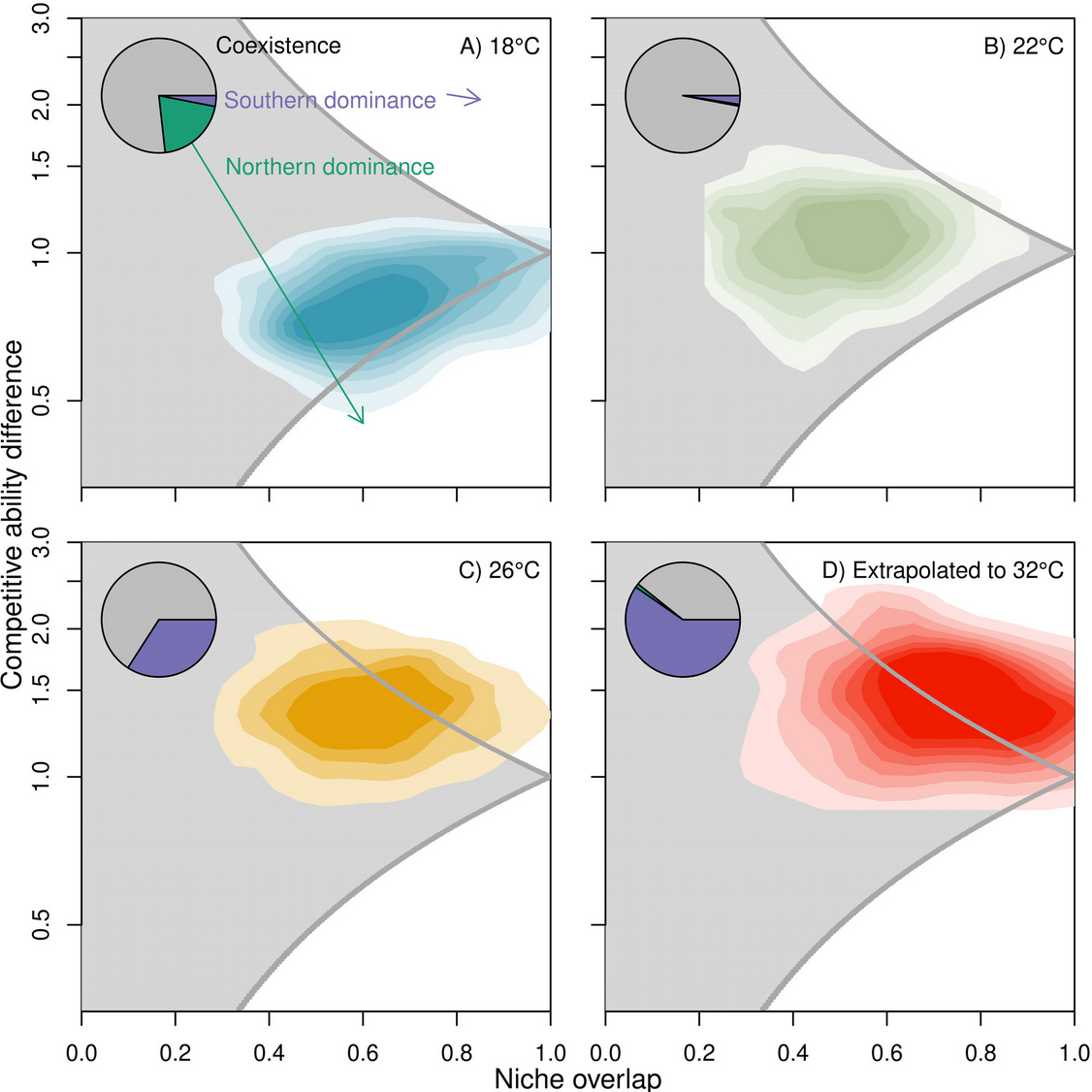
Bruijning M, De Meester L, Visser M. D., Fossen E.I.F., Vanvelk H., Raeymaekers J.A.M., Govaert L., Brans K.I., Einum S., Jongejans E.
Published: September 2025, Ecology Letters
🔗 Read the full paper
Linking Individual Performance to Density‐Dependent Population Dynamics to Understand Temperature‐Mediated Genotype Coexistence
New paper by Marjolein
Integrating Modern Coexistence Theory with stage-structured population modelling reveals the demographic mechanisms that underly rapid evolutionary responses in Daphnia.
Bruijning M, De Meester L, Visser M. D., Fossen E.I.F., Vanvelk H., Raeymaekers J.A.M., Govaert L., Brans K.I., Einum S., Jongejans E.
Published: September 2025, Ecology Letters
🔗 Read the full paper
Applying evolutionary theory to understand host–microbiome evolution
New ideas to study host-microbiome evolution using existing frameworks in Evolutionary Biology: Niche construction, indirect genetic effects, maternal effects and multilevel selection
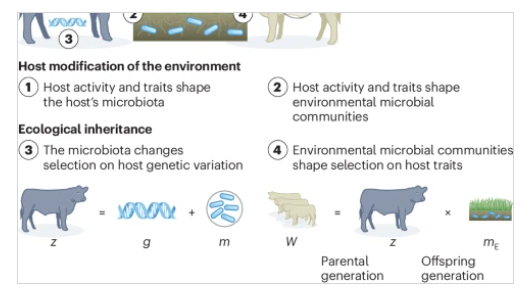
Week B, Russell S, Schulenburg H, Bohannan B, Bruijning M
Published: September 2025, Nature Ecology & Evolution
🔗 Read the full paper
Applying evolutionary theory to understand host–microbiome evolution
New ideas to study host-microbiome evolution using existing frameworks in Evolutionary Biology: Niche construction, indirect genetic effects, maternal effects and multilevel selection
Week B, Russell S, Schulenburg H, Bohannan B, Bruijning M
Published: September 2025, Nature Ecology & Evolution
🔗 Read the full paper